
How to keep your account from getting hacked
What for: So you don't get hacked.
If you use a short and simple password on Instagram, cybercriminals can guess it and hijack your account. A long and complex password is more secure. Use a strong password that:
- Is at least 8 and up to 20 characters long;
- Contains lowercase and uppercase letters, numbers, and special characters ($, @, etc.);
- Is not an actual word or easy-to-guess phrase;
- Is not the same as your passwords for any other accounts;
- Does not consist of information that strangers could easily find out (your name, date of birth, pet's name, and so forth — or those of your friends or relatives).
To change your password:
- Go to your profile and tap the three-stripe icon in the upper-right corner of the screen;
- Open Accounts Center;
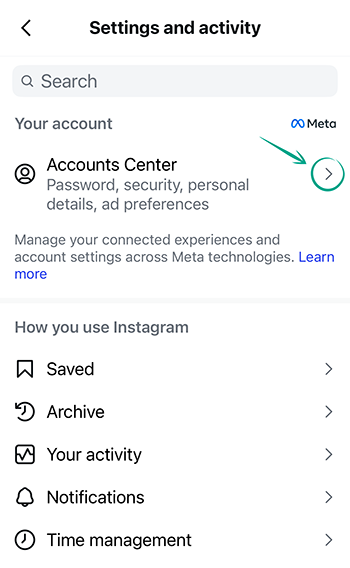
- Tap Password and security;
- Select Change password;
- Select your Instagram account;
- Enter your current password;
- Enter the new password in the fields below twice;
- Tap Change password.
What for: So you definitely don't get hacked.
If you enable two-factor authentication, Instagram may ask for a one-time passcode in addition to your password during login. That way, even if cybercriminals learn your username and password, they won't be able to use them. The code is sent to your specified phone number or generated in a dedicated app you need to install separately.
To enable two-factor authentication:
- Go to your profile and tap the three-stripe icon in the upper-right corner of the screen;
- Open Accounts Center;
- Tap Password and security;
- Select Two-factor authentication;
- Select your Instagram account;
- Choose how you want to receive the one-time code:
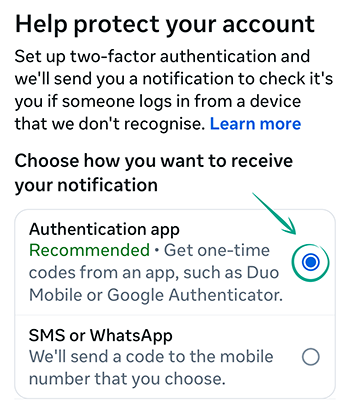
- Authentication app: Download an authenticator app like Kaspersky Password Manager (if you have a subscription) or Google Authenticator. Scan the QR code or copy the Instagram key and enter the verification code from the app;
- SMS or WhatsApp: If you don't have a phone number linked to your account, you'll need to enter one and tap Next. Then, enter the code you receive on your phone.
- Tap Done;
- Select a backup 2FA method in case you're unable to use your main one;
- Go back to Two-factor authentication and tap Additional methods;
- Enable the Login Requests option to receive notifications for approving new devices in the app.
With two-factor authentication, you can log in to your account even if you lose your phone. Use recovery codes for that. Each of the ten codes can be used only once. Write them down or take a screenshot, and keep the information in a safe place. To get your codes:
- Under Two-factor authentication, tap Additional methods;
- Tap Backup codes and save the suggested codes.
To add your device to the list of trusted devices, check Trust this device after entering your credentials to log in to your account. Be careful and do not do this if you are logging in to your account from someone else's device. If a device you've marked as trusted falls into someone else's hands, they'll be able to log in to your account, bypassing two-factor authentication.
To avoid this scenario, periodically check your trusted devices list and keep only those you are currently using:
- Under Two-factor authentication, tap Trusted devices;
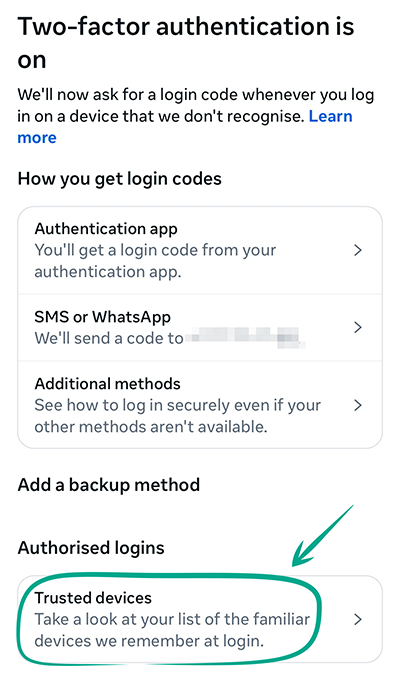
- A list of all devices considered trusted will open. The list shows the login method, operating system, and login location and time. If you see a device you don't recognize, tap to remove it;
- Tap Remove device.
What for: To take timely security measures.
If you've logged in from someone else's device or you suspect that your account might have been hacked, you can review the activity log in your profile to see if a bad actor has done anything on your behalf and roll back all you find inappropriate. You can also review the list of your active sessions, customize security alerts, and terminate sessions you don't recognize or no longer need.
To view the log or roll back actions:
- Go to your profile and tap the three-stripe icon in the upper-right corner of the screen;
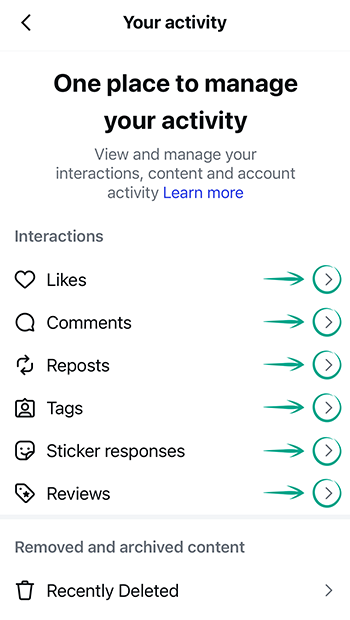
- Under How you use Instagram, tap Your activity;
- To view the details of the various types of interactions, switch between sections:
- Likes;
- Comments;
- Reposts;
- Tags;
- Sticker responses;
- Reviews.
- To view the details of posts, switch between sections:
- Recently deleted;
- Archived;
- Posts;
- Reels;
- Highlights.
- To view the timeline of key changes made to your Instagram profile, open Account history.
To view a list of active sessions and terminate the ones you don't need:
- Go to your profile and tap the three-stripe icon in the upper-right corner of the screen;
- Open Accounts Center;
- Tap Password and security;
- Select Where you're logged in;
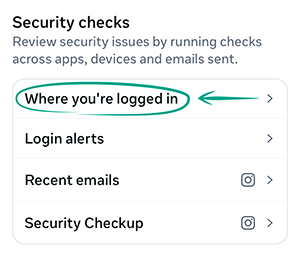
- Select your Instagram account. The Account login activity page will open, showing your current and other active sessions;
- If you see a session or device you don't recognize, tap to remove it;
- Select the session in the list;
- Tap Log out;
- Confirm your choice.
To enable security alerts when logging in to your account on a new device:
- Go to your profile and tap the three-stripe icon in the upper-right corner of the screen;
- Under How others can interact with you, tap Messages and story replies;
- Tap Security alerts;
- Enable Security alerts.
What for: So nobody else can log in to your account.
Instagram lets you save account login credentials on the device so you don't have to enter the login and password every time. If your device ends up in the hands of strangers, other people can access your account. To prevent this from happening, you can remove such data from the device.
Check your app settings to see if saving login credentials is enabled:
- Go to your profile and tap the three-stripe icon in the upper-right corner of the screen;
- Open Accounts Center;
- Tap Password and security;
- Tap Saved login;
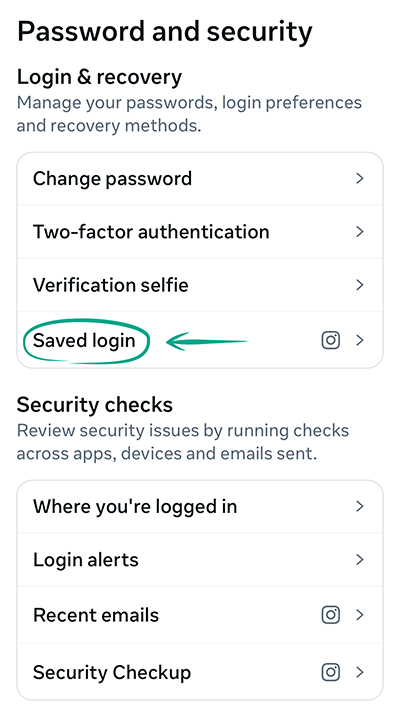
- If Saved login is on, toggle it off.
Turning this off will remove your saved login info from the app. You can also use a different method to remove your saved info after logging out:
- Go to your profile and tap the three-stripe icon in the upper-right corner of the screen;
- Tap Log out;
- If the app prompts you to save login credentials, this means that Instagram has not saved them yet. In that case, you can cancel logout and continue using Instagram.
- Confirm logout. A page opens with your profile picture, a Continue button, and three dots in the upper-right corner;
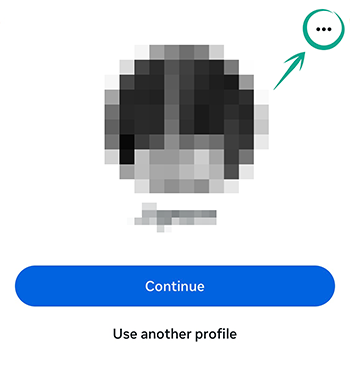
- Tap the three dots;
- Tap Remove profiles from this device and confirm.
Please note: You should decline to save your login when logging in to or out of your account.
Downside: You will have to enter your login and password manually.
What for: To prevent the loss of one account from causing the loss of all other accounts.
Instagram lets you link your account to profiles on other Meta platforms. This lets you automatically share your posts on other social networks. If cybercriminals hack your Instagram account, they will be able to publish posts on your behalf on related networks. Meanwhile, if cybercriminals find out the login and password for your Facebook account, they will be able to hijack your Instagram account.
To disable cross-publication of entries between your accounts:
- Go to your profile and tap the three-stripe icon in the upper-right corner of the screen;
- Open Accounts Center;
- Tap Connected experiences;
- Tap Sharing across profiles;
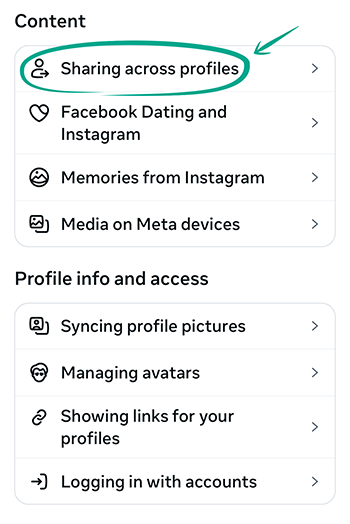
- This displays a list of your Meta profiles. For each of the profiles:
- Tap your profile picture;
- Toggle off Your Instagram posts;
- Toggle off Your Instagram story;
- Toggle off Your Instagram reels.
- Go back to Connected experiences;
- Tap Memories from Instagram;
- Toggle off the option to the right of your Instagram profile picture;
- Go back to Connected experiences;
- Tap Showing links for your profiles;
- This displays a list of your Meta profiles. For each of the profiles:
- Tap your profile picture;
- Turn off showing links to your profiles.
Please note: If your Accounts Center contains two or more accounts for different Meta products, the ability to log in to one using the credentials of another is enabled by default. There's no way to disable it.
To prevent unauthorized access via linked Meta accounts, remove them from the Accounts Center:
- Go to your profile and tap the three-stripe icon in the upper-right corner of the screen;
- Open Accounts Center;
- Tap Manage accounts;
- Tap Remove next to another Meta account;
- Tap Remove account;
- Tap Continue;
- Tap Remove [account name].
Downside: Disabling cross-service functions and deleting a Meta account will prevent you from sharing posts simultaneously in several services. You will also no longer be able to restore access to Instagram using your Facebook profile.
What for: To protect your account from cybercriminals.
If Instagram's algorithms detect suspicious activity within your profile or account, the app may request verification to confirm that it is you — and not a hacker — performing these actions. Providing a video selfie is a way to verify account ownership. You can create a video in advance and save it in the Meta Accounts Center. If Instagram detects suspicious activity and asks for a video selfie, the footage will be compared against the biometric data on file.
To create and save a video selfie:
- Go to your profile and tap the three-stripe icon in the upper-right corner of the screen;
- Open Accounts Center;
- Tap Password and security;
- Tap Verification selfie;
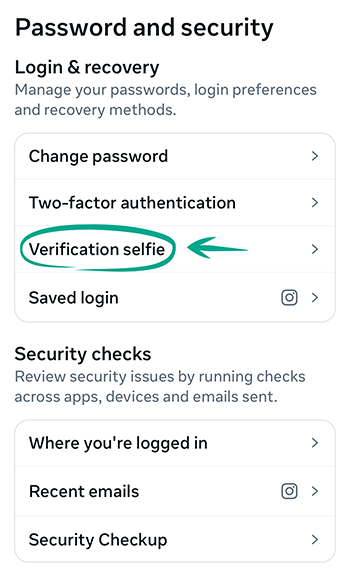
- Select your Instagram account;
- Tap Next. During this step, the app may ask you to enter a verification code it sends to the e-mail address associated with your account;
- Tap Take a video selfie:
- The app will request camera access if you haven't previously granted that permission. Tap Next;
- Choose one of two options:
- While using the app;
- Only this time.
- Follow the on-screen prompts to adjust your head position in front of the camera;
- Tap Done.
To update or delete your video selfie:
- Go to your profile and tap the three-stripe icon in the upper-right corner of the screen;
- Open Accounts Center;
- Tap Password and security;
- Tap Verification selfie;
- Select your Instagram account;
- Select an option and follow the on-screen prompts:
- Update selfie;
- Delete selfie.
Please note: By creating a video selfie, you share your facial recognition data with Meta and authorize the platform to store it. The video selfie comparison feature doesn't guarantee absolute protection against bad actors utilizing deepfake technology. Furthermore, Instagram doesn't provide a definition or specific criteria for suspicious activity and reserves the right to decide whether to request a video selfie if such activity is detected.
What for: To reduce the risk of being hacked.
You can use the phone number linked to your account as the primary login or recovery method. However, linking your phone number exposes you to SIM swapping where attackers exploit your carrier to gain access to your data. If you consider this threat relevant, remove your phone number:
- Go to your profile and tap the three-stripe icon in the upper-right corner of the screen;
- Open Accounts Center;
- Tap Profiles and personal details;
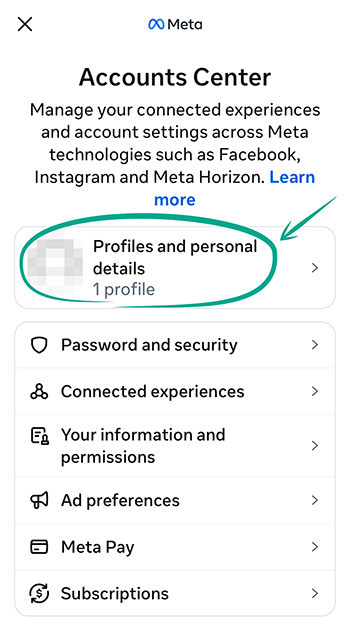
- Select Contact info;
- Tap your phone number;
- Select Delete number;
- Tap Delete to confirm.
Downside: You'll no longer be able to use one-time codes sent to your phone as the primary login method or as one of the two-factor authentication methods.
How to protect your money
What for: To prevent criminals from using your accounts.
Certain payments and purchases within Instagram can be processed without verification as long as you've saved a payment method in the app. To prevent accidental expenditures and protect your money, you're advised to enable transaction verification. To enable PIN verification:
- Go to your profile and tap the three-stripe icon in the upper-right corner of the screen;
- Under Your orders and fundraisers, tap Orders and payments;
- Tap Security;
- Toggle on Use PIN to confirm payments or Use Face ID instead of PIN:
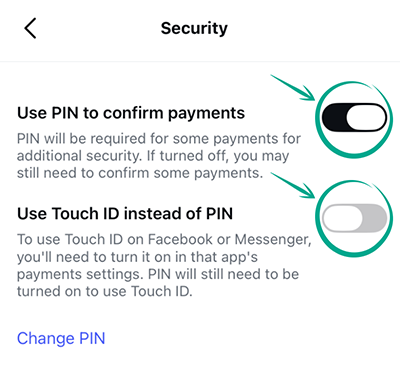
- If choosing the former option, enter a four-digit PIN;
- If choosing the latter option, verify your identity by scanning your face.
What for: Not to lose money.
Instagram users can spend money directly on the social network — for example, to buy ads. To this end, Instagram requests and stores details of a bank card or PayPal account. However, if your account gets compromised by a leak or gets hacked, your financial info can end up in the hands of cybercriminals.
To remove stored bank card and e-wallet data:
- Go to your profile and tap the three-stripe icon in the upper-right corner of the screen;
- Open Accounts Center;
- Tap Meta Pay;
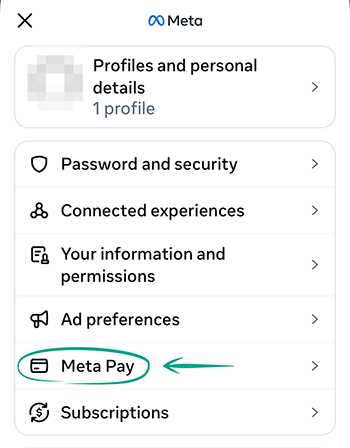
- Go to the Manage tab;
- Tap a card or PayPal account in the list;
- Tap Edit;
- Tap Delete.
Downside: After removing cards and accounts you will not be able to order ads or make purchases on Instagram. However, you can still buy goods on pages of stores if payment is processed on the merchant's website.
How to keep corporations out of your business
What for: So Instagram does not know more than it needs to.
Instagram requests the contact list of your phone to help you locate the people you know on the social network. The service also collects information about your contacts to generate targeted ads and form the news feed. Furthermore, since Instagram may share this data with third parties, there's a heightened risk of a data breach.
To disable contact synchronization:
- Go to your profile and tap the three-stripe icon in the upper-right corner of the screen;
- Under Your app and media, select Device permissions;
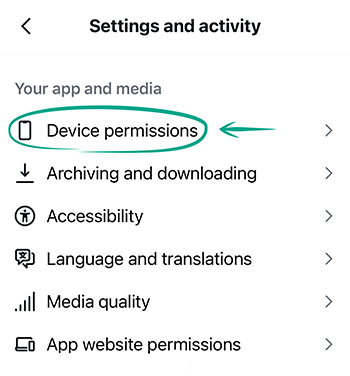
- Tap Contacts;
- Tap Update device settings;
- Tap Open device settings. The phone's settings menu opens. Once there:
- Tap Contacts;
- Select No.
Alternatively, you can do the same in the device settings:
- Open Settings on your device;
- Tap Apps and select Instagram;
- Select Contacts;
- Tap None.
If you previously gave the app access to your contacts, revoke the permission:
- Go to your profile and tap the three-stripe icon in the upper-right corner of the screen;
- Open Accounts Center;
- Tap Your information and permissions;
- Select your Instagram account;
- Tap Upload contacts;
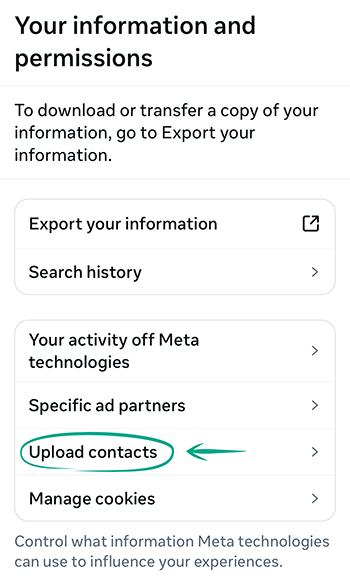
- Toggle off Connect contacts;
- Tap Disconnect to confirm.
Downside: Without access to the contact list, Instagram will no longer be able to advise you to follow the accounts of your friends in your contact list.
Please note: Contact permissions granted to Facebook, Messenger, or WhatsApp may be used by Instagram. To prevent this, revoke contact access for every Meta application on all devices with an address book. To check what contacts have been uploaded to your account and delete the ones you don't want there, follow the link to Messenger.
What for: So no one knows where you are.
Instagram tracks your location in order to suggest geotags for your posts, generate targeted ads, and suggest hangouts. If you don't want the social network or some strangers to know your location, you can disable access to geodata.
To stop Instagram from tracking your location:
- Go to your profile and tap the three-stripe icon in the upper-right corner of the screen;
- Under Your app and media, tap Device permissions;
- Select Location services;
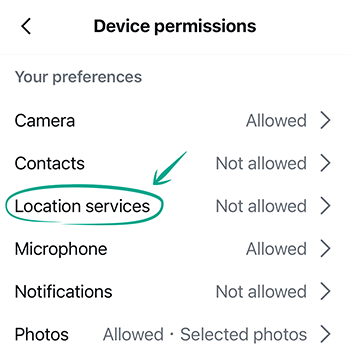
- Tap Update device settings;
- Tap Open device settings. The phone's settings menu opens. Once there:
- Tap Location;
- Select Never.
Alternatively, you can do the same in the device settings:
- Open Settings on your device;
- Tap Apps;
- Select Instagram;
- Tap Location;
- Select Never.
What for: To stop Instagram from tracking your activity outside the platform.
App partners share information with Instagram regarding your activity on their websites and mobile apps, including your advertising ID, email address, or phone number — depending on what they have access to. If this information matches your account details in the app, Instagram maintains a log of your online activity and may show you personalized ads based on your interactions with partner services. To clear the activity log and stop Instagram from using information about your online activity for personalizing ads:
- Go to your profile and tap the three-stripe icon in the upper-right corner of the screen;
- Open Accounts Center;
- Select Your information and permissions;
- Tap Your activity off Meta technologies;
- Tap Clear previous activity and confirm;
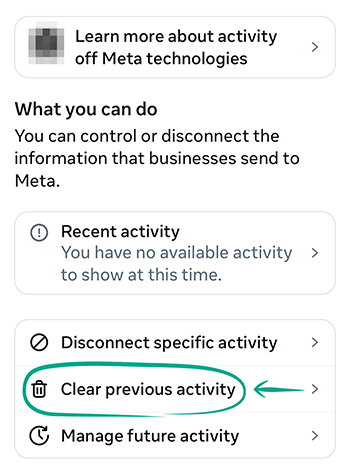
- Go back to Your activity off Meta technologies;
- Tap Manage future activity;
- Select Disconnect future activity;
- Tap Continue and confirm.
Note that the updated settings will take effect within two days. The amount of ads will remain unchanged, but they'll no longer consider your activity outside of Instagram. The app will still receive information about your online activity from partners, but it'll stop using it for ad targeting.
What for: To stop Instagram from accessing your personal data.
Instagram can request permission to access the camera, microphone, or photos for certain features, such as content posting or video calling. If you don't want the app to have constant access to your data — including in the background — you can disable these options on your device:
- Go to your profile and tap the three-stripe icon in the upper-right corner of the screen;
- Under Your app and media, select Device permissions;
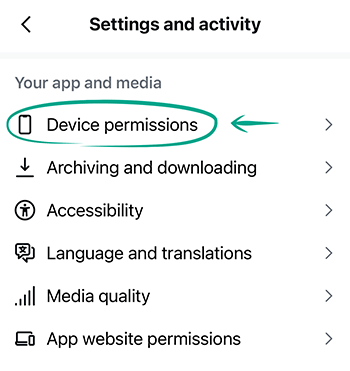
- Tap Camera:
- Tap Update device settings;
- Tap Open device settings;
- Turn off Camera.
- Tap Microphone:
- Tap Update device settings;
- Tap Open device settings;
- Turn off Microphone.
- Tap Photos:
- Tap Update device settings;
- Tap Open device settings;
- Tap Photos;
- Select None or Limited Access.
Downside: Disabling these settings might limit or break some Instagram features. In particular, to post a photo, record a video from the app, send a voice message, or attach an image, you'll need to re-enable these permissions.
What for: To restrict what Facebook and its partners know about you.
Instagram and its advertising partners may use information about your in-app activity, personal details in your profile, and other data to select ads specifically tailored to your interests. If targeted ads bother you, disable the use of your details and information about your actions on Instagram:
- Go to your profile and tap the three-stripe icon in the upper-right corner of the screen;
- Open Accounts Center;
- Tap Ad preferences. You'll land on the Customize ads tab;
- Go to the Manage info tab;
- Under Information used to show you ads, tap Categories used to reach you;
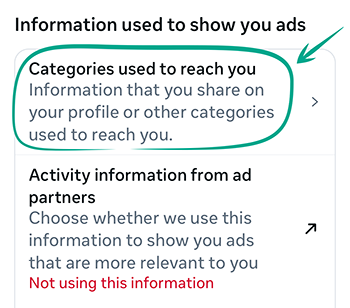
- Tap View all below the category list;
- Tap Remove next to each category;
- Go back to the Manage info tab;
- Tap Activity information from ad partners;
- Tap Review setting;
- Select No, don't make my ads more relevant by using this information;
- Tap Confirm;
- Go back to the Manage info tab;
- Select Audience-based advertising to see the list of advertisers who have included you in their target audience based on your personal information;
- For each advertiser individually:
- Tap the advertiser;
- Tap You may have interacted with their website, app, or store;
- Tap Hide ads.
- Under Ads shown outside of Meta, select Ads in other apps;
- Tap Don't allow us to show you ads in other apps;
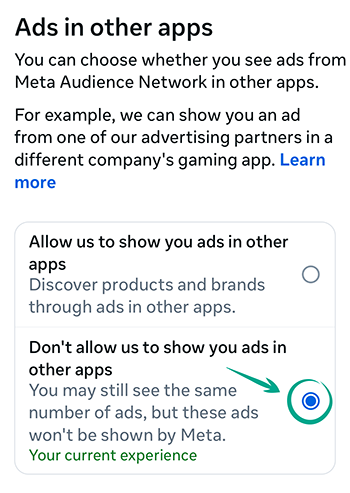
- Under Ads shown outside of Meta, select Ads about Meta;
- Select Don't use my activity to show me ads about Meta;
- Tap Confirm.
Please note: You'll still see ads, but they won't be based on your personal data.
How to defeat spammers and trolls
What for: To keep your peace of mind.
Instagram automatically hides comments it identifies as offensive or inappropriate, such as those containing spam or self-promotion. If spammers, trolls, or other bad actors still get through, you can enable stricter filtering to detect inappropriate comments by both direct and indirect signs.
To customize comment filters for posts and reels:
- Go to your profile and tap the three-stripe icon in the upper-right corner of the screen;
- Under How others can interact with you, tap Hidden words;
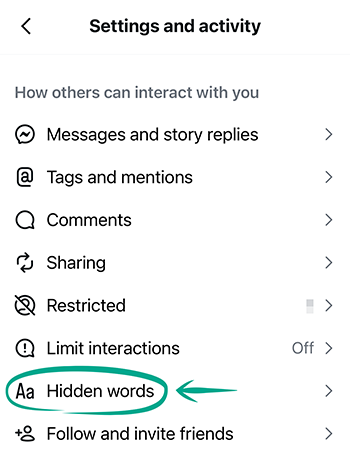
- Toggle on Advanced comment filtering.
Additionally, you can enable advanced comment filtering by creating a list of forbidden words, phrases, numbers, and emoji:
- Go to your profile and tap the three-stripe icon in the upper-right corner of the screen;
- Under How others can interact with you, tap Hidden words;
- Tap Manage custom words and phrases;
- Enter words and phrases you find inappropriate, separated with commas;
- Tap Add;
- Go back to Hidden words;
- Under Custom words for messages and comments, toggle on Hide Comments.
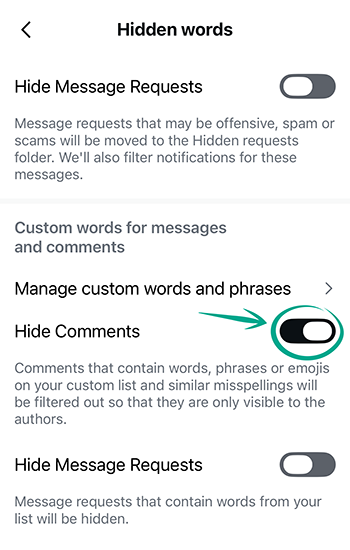
Please note: Comments hidden by Instagram's algorithms will be visible to everyone except you. Comments caught by the blocked words and phrases filter will remain visible only to the author. To review and approve any comments you consider harmless, review the hidden comments below each post.
What for: So you can avoid running into unwanted people.
If you want to stop communicating with a specific user, you can block them. After blocking, you will automatically unsubscribe from each other (if you were subscribed), and all their likes and comments of/on your content will disappear. Blocked users will not be able to view your profile, like or comment on your content, or send you direct messages. The user won't be told you've restricted interaction with them specifically.
To block a user:
- Go to this user's page;
- Tap the three-dot icon in the upper right corner of the screen;
- Tap Block;
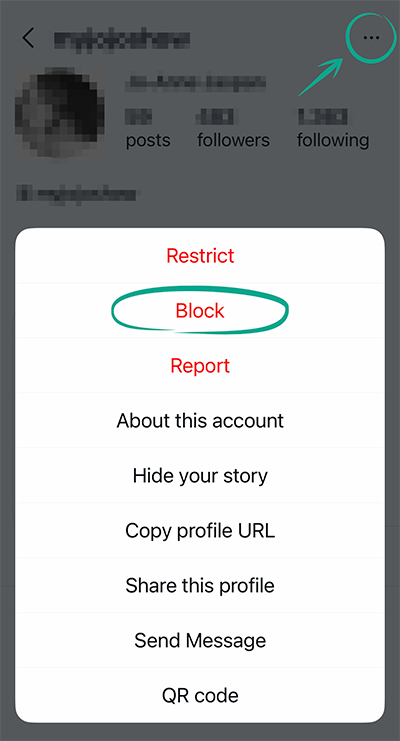
- Tap Block again or Block and report to confirm;
- If you've selected Block and report, follow the on-screen prompts to provide a reason for reporting the user.
To review the list of users you've blocked or unblock someone:
- Go to your profile and tap the three-stripe icon in the upper-right corner of the screen;
- Under Who can see your content, tap Blocked;
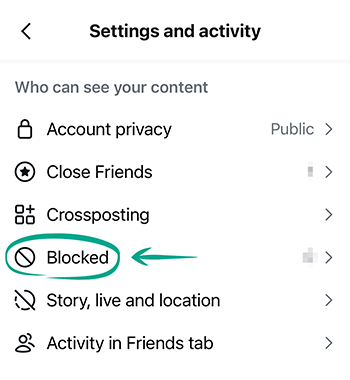
- To unblock a user, tap Unblock to the right of their profile picture and name.
Alternatively, you can unblock the user on their page:
- Go to the profile of the user you wish to unblock;
- Tap the three-dot icon in the upper right corner of the screen;
- Tap Unblock;
- Tap Unblock again to confirm.
What for: To remove irrelevant comments.
If you have a public profile, all Instagram users can comment on your posts by default. Spammers and trolls often take advantage of this.
To limit comments on your future posts, reels, and stories:
- Go to your profile and tap the three-stripe icon in the upper-right corner of the screen;
- Under How others can interact with you, tap Comments;
- Under Who can comment, tap Posts and reels;
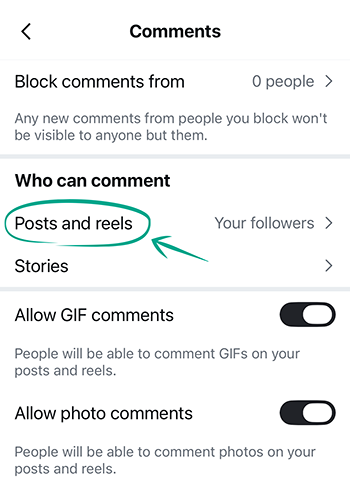
- Select an option:
- People you follow;
- Your followers;
- Off.
- Return to Comments;
- Under Who can comment, tap Stories;
- Select an option:
- People you follow;
- Off.
- To block comments from certain users, tap Block comments from:
- Select a user name from the list or enter one manually;
- Tap Block to the right of the user name.
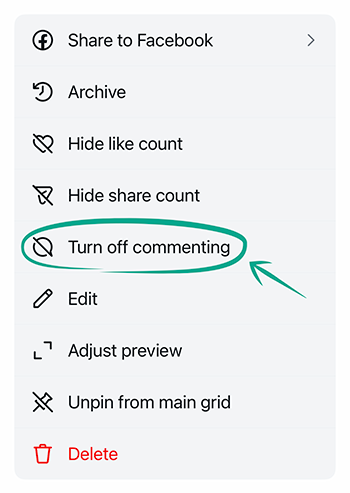
For specific existing posts, your only option is to disable commenting entirely: To do that:
- Go to your profile;
- Open a post;
- Tap the three-dot icon next to your profile picture;
- Select Turn off commenting.
To disable commenting for an individual post while you're creating it:
- When creating a new post, tap More options;
- Enable the Turn off commenting option.
Please note: Hidden comments will be visible to their authors only. To review and approve any comments you consider harmless, review the hidden comments below each post. If you set your profile to private, only approved followers will be able to comment on your posts.
What for: So that you are not bothered by people you do not know.
By default, everyone who sees your stories can respond and react to them. Responses and reactions are displayed in personal messages, which means that if your stories are public, ill-wishers and advertisers can use this feature and flood you with spam and unpleasant messages.
To prevent strangers from responding to your stories:
- Go to your profile and tap the three-stripe icon in the upper-right corner of the screen;
- Under How others can interact with you, tap Messages and story replies;
- Tap Story replies;
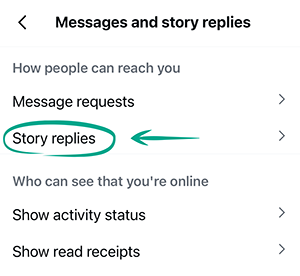
- Choose how to limit:
- Allow story replies only from people you follow;
- Don't allow story replies.
What for: So that trolls and advertisers don't bother you.
Instagram users can tag you in photos and reels in their posts. Such posts automatically appear on your profile and become visible to all users. This function can also be used by ill-wishers and spammers. If you don't want just anyone tagging you in their posts, restrict that setting so you can manually approve every tag yourself. You can also limit who's allowed to mention you with a link to your profile in their stories, comments, live streams, or captions:
- Go to your profile and tap the three-stripe icon in the upper-right corner of the screen;
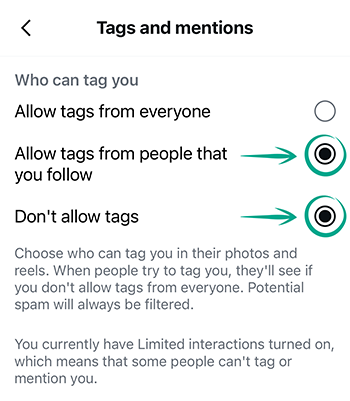
- Under How others can interact with you, tap Tags and mentions;
- Choose how you want to limit tagging:
- Allow tags from people that you follow;
-
Don't allow tags.
- Toggle on Manually approve tags;
- Choose how you want to limit mentions:
- Allow mentions from people you follow;
- Don't allow mentions.
Please note: In this same section, you can review the posts other people have tagged you in and pick which ones you want to hide or remove from your profile.
What for: To prevent others from using your content for their own ends.
By default, other Instagram users can add your content to their own posts, stories, and reels, or share them in direct messages with others. To keep ill-wishers and trolls from taking advantage of this — and to make sure your content doesn't end up with total strangers — block people from using, sharing, or remixing it. Additionally, you can opt out of ad usage, downloads, and direct links to your content:
- Go to your profile and tap the three-stripe icon in the upper-right corner of the screen;
- Under How others can interact with you, tap Sharing and reuse;
- Toggle off Story shares;
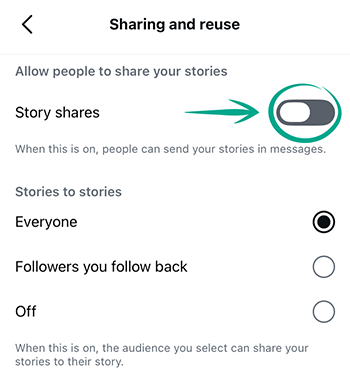
- Select an option under Stories to stories:
- Followers you follow back;
- Off.
- To stop others from sharing your posts and reels:
- Toggle off Posts and reels to stories;
- Toggle off Reposts on posts and reels.
- To stop others from reusing or remixing your content, under Allow people to create with and reuse your content:
- Toggle off Posts;
- Toggle off Reels.
- Toggle off another Reels option below to stop other users from borrowing your original audio for their Meta AI content;
- Toggle off Downloads to stop others from downloading your reels and original audio clips;
- Select Off under Website embeds to stop others from displaying your posts and profile outside of Instagram;
- Toggle off Featured content requests in shops to stop businesses from sending you requests to display content you've posted in Meta services.
To stop others from using your reels in their ads:
- Go to your profile and tap the three-stripe icon in the upper-right corner of the screen;
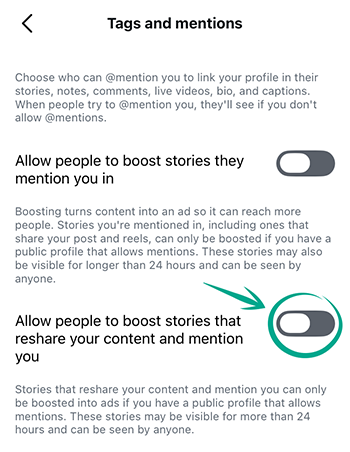
- Under How others can interact with you, tap Tags and mentions;
- Toggle off Allow people to boost stories that they mention you in;
- Toggle off Allow people to boost stories that reshare your content and mention you.
What for: So that they don't upset you.
If someone is bugging you or just getting on your nerves — but you can't or don't want to go full block — set up individual restrictions for them instead. Once you do that, they won't be able to see if you're online or if you've read their messages. Their DMs will also get filtered and tucked away in your message requests so you can moderate them. Only you and that user will be able to see their comments on your content until you decide to approve them. Plus, they won't be able to use your content for their own — no reposting, no remixing, and no mentioning or tagging you in their posts.
To set the restrictions:
- Navigate to the profile of the person with whom you would like to minimize interaction to a safe minimum;
- Tap the three dots in the upper right corner of the screen and tap Restrict;
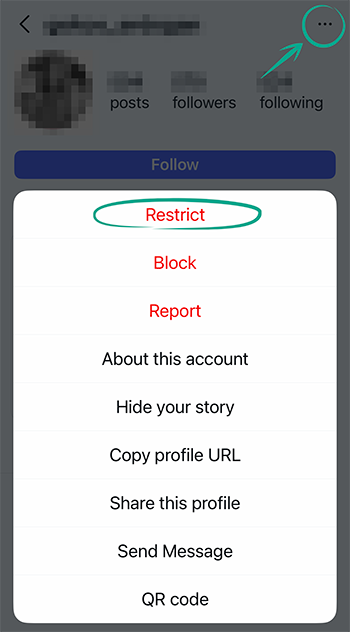
- Tap Restrict again.
What for: To avoid spammers.
When someone sends you a private message for the first time, you first receive a message request from them, which is displayed in the corresponding tab of the personal messages screen. To start chatting with this person, you need to accept their request first. You'll still see the message text, though. If you're in no mood to see messages from total strangers or deal with spammers and trolls, you can limit the ability to send you message requests or add you to group chats:
- Go to your profile and tap the three-stripe icon in the upper-right corner of the screen;
- Under How others can interact with you, tap Messages and story replies;
- Go to Message requests;
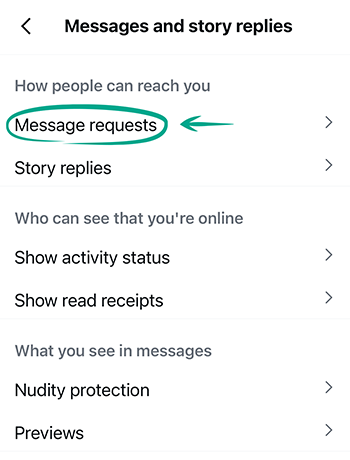
- Select an option under Who can send you message requests:
- Everyone;
- Your followers;
- No one.
- Under Who can add you to group chats, choose People you follow or have messaged before.
Additionally, you can hide message requests containing words that you find inappropriate:
- Go to your profile and tap the three-stripe icon in the upper-right corner of the screen;
- Under How others can interact with you, tap Hidden words;
- Toggle on Hide Message Requests;
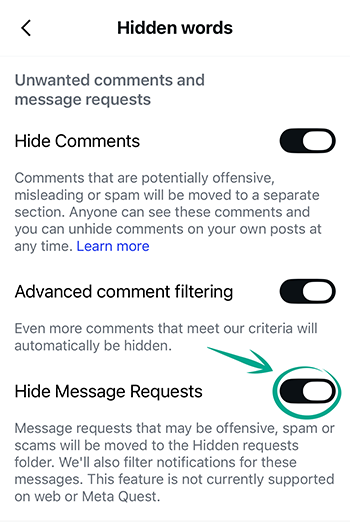
- Tap Manage custom words and phrases;
- Enter words and phrases you find inappropriate, separated with commas;
- Tap Add;
- Go back to Hidden words;
- Under Custom words for messages and comments, toggle on Hide Message Requests.
Please note: Instagram will hide both message requests and comments that contain these words.
What for: To protect yourself from ill-wishers.
Instagram has a feature that lets you limit how certain user groups interact with you. This is helpful if someone is bothering you, stalking you, or if you simply want a break from others interacting with your profile and content. You can limit interactions for anyone not on your Close Friends list, people who don't follow you, and users who have followed you for less than a week:
- Go to your profile and tap the three-stripe icon in the upper-right corner of the screen;
- Under How others can interact with you, tap Limit interactions;
- To choose whose interactions will be temporarily hidden, tap Who will be limited;
- Activate the option for relevant user groups:
- Everyone but your Close Friends;
- Recent followers;
- Accounts that don't follow you.
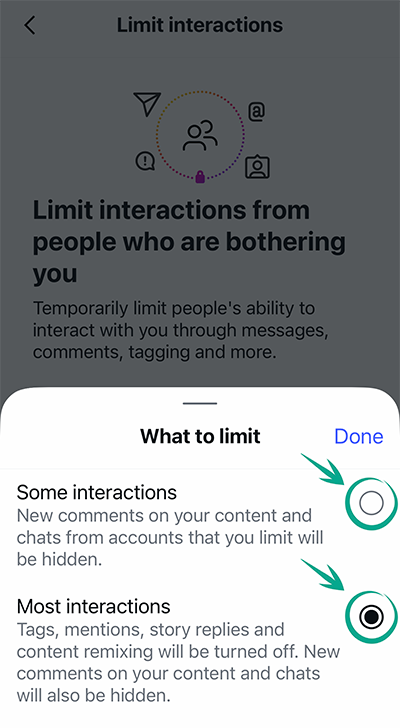
- To choose the interactions to hide temporarily, tap What to limit;
- Select an option:
- Some interactions: To temporarily hide all new comments and messages from a group of users you choose;
-
Most interactions: To also temporarily hide tags, mentions, replies to stories, and remixes of your content.
- Tap When we'll remind you to turn this off;
- Set a time for the app to ask you whether the temporary limits should be removed;
- Tap Done;
- Tap Turn on.
Please note: Comments and messages from the groups you select will remain hidden even after the time limit you set expires. You can review these hidden comments and messages at any time and approve them if you want to make them visible. If these users try to tag or mention you — or attempt to remix your content — they'll receive a notification stating that you only allow these interactions from specific groups. Keep in mind that the maximum duration for these temporary interaction limits is four weeks; however, you can immediately set a new limit once that period ends.
How to hide posts from unwanted people
What for: So your posts will be seen only by those for whom they are intended.
You can choose who will see your Instagram posts. By default, these can be viewed by anyone if your profile is public, or only by your followers if your profile is private. This can be awkward if you're not comfortable sharing the details of your private life with strangers or people you don't like, even if some of them are your followers. When creating a new post, you can limit your audience to only those on your Close Friends list.
To create or edit your Close Friends list:
- Go to your profile and tap the three-stripe icon in the upper-right corner of the screen;
- Under Who can see your content, tap Close Friends;
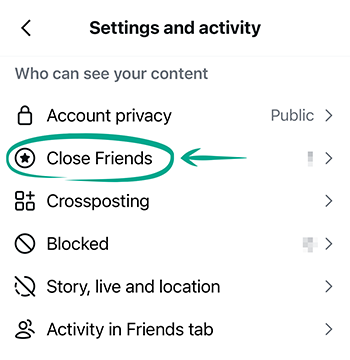
- Select users from your followers to add or remove them from the list;
- Tap Done.
To restrict the visibility of your post while you're creating it:
- After editing your content, tap Next;
- Tap Audience at the bottom of the page;
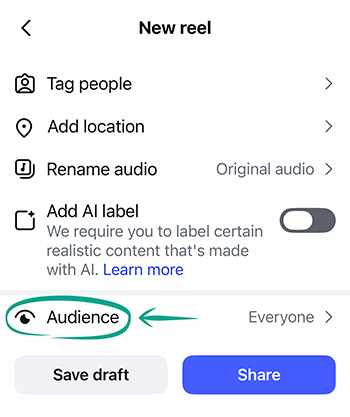
- Select Close Friends.
What for: So your stories are visible only to those for whom they are intended.
By default, your stories are visible to everyone, but your can stop specific users from viewing them. This can be helpful if you use stories to post personal photos and videos that you do not wish to share with everybody.
To configure the visibility of stories:
- Go to your profile and tap the three-stripe icon in the upper-right corner of the screen;
- Under Who can see your content, tap Story, live and location;
- Tap Hide story and live from;
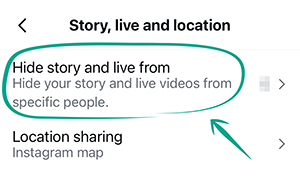
- Choose followers you want to hide your stories from.
Additionally, you can create a Close Friends list and publish each individual story for that group only:
- Go to your profile and tap the three-stripe icon in the upper-right corner of the screen;
- Under Who can see your content, tap Close Friends;
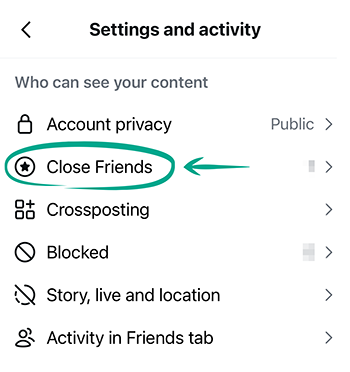
- Select users in your followers list;
- Tap Done;
- To make a story visible only to close friends, while publishing the story, tap Close Friends at the bottom of the screen.
To limit the visibility of a story already posted:
- Tap the story you want to hide;
- Tap the three dots in the lower right corner of the screen;
- Tap Story settings;
- Under Viewing, select:
- Hide story from: Your story won't be visible to the people you select in your friends list;
- Close friends: Your story will be visible only to users on your Close Friends list.
- Tap Done;
- Tap Done again.
Please note: Users you add to your Close Friends list won't be notified about it.
How to prevent your personal data from being exposed
What for: To keep your comments and preferences private.
On Instagram, your likes and comments on reels are visible to mutual followers by default in the Friends tab of your profile. If you'd rather keep that information private, you can hide it from everyone:
- Go to your profile and tap the three-stripe icon in the upper-right corner of the screen;
- Under Who can see your content, tap Activity in Friends tab;
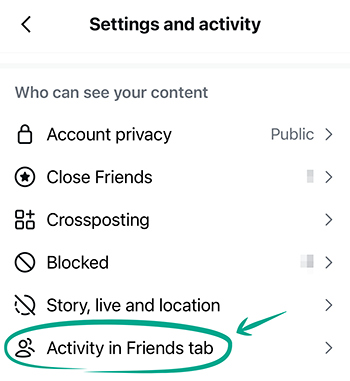
- Select No one.
What for: So no one can find out who's interested in your content.
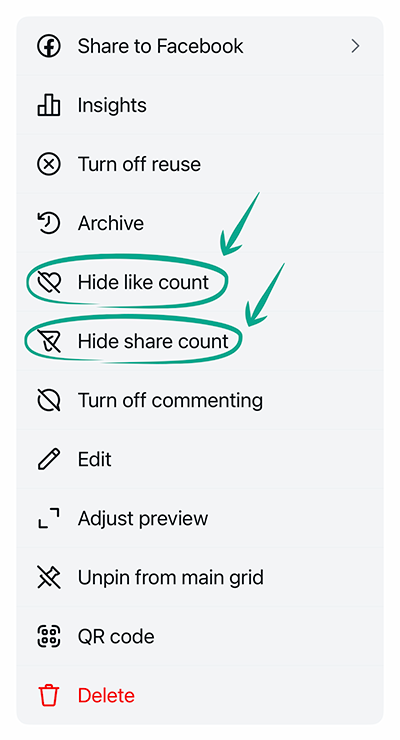
By default, the like and share counts are visible under each of your posts. This information is visible to everyone if your profile is public, or only to your followers if it is private. This data doesn't just indicate how popular your content is; it also reveals exactly who is interested in your posts, how frequently they engage, and how your content spreads across the platform. If you prefer not to share this information, you can hide the like and share counts for each individual post.
To do this for an existing post:
- Go to your profile;
- Open a post;
- Tap the three-dot icon next to your profile picture;
- Tap Hide like count;
- Tap Hide share count.
To do this for a new post:
- When you're done editing the content, tap More options;
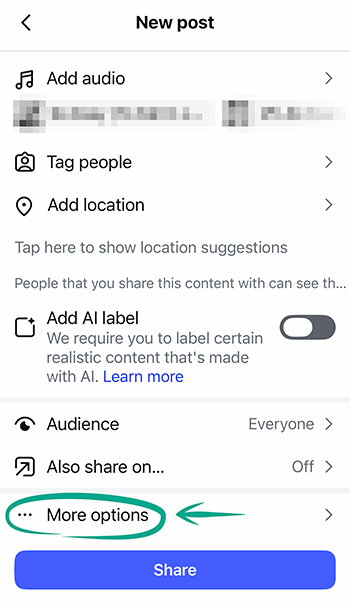
- Turn on the following options:
- Hide like count on this post;
- Hide share count on this post.
What for: So that your secrets are kept within your chats.
The disappearing messages feature is useful if you're concerned that a stranger might gain access to your account and read your chats. Once it's turned on, your messages vanish for everyone in the chat 24 hours after they're sent.
To activate the disappearing messages mode:
- Tap the Direct Messages icon at the bottom center of the screen;
- Open the chat you want to turn on disappearing messages for;
- Swipe up from the bottom of the screen. You'll see a notification that says, You turned on disappearing messages.
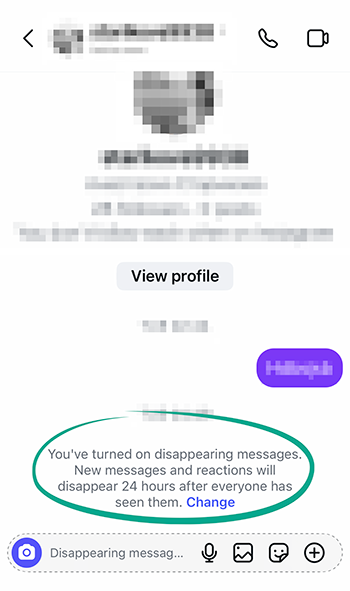
Please note: The other party will see the notification too. If they make a screenshot of the chat window, the app will alert you. Chats with disappearing messages turned on are marked in your conversation list with a dotted circle to the right of the username.
Downside: If you make a screenshot of the chat window, the other party will know.
What for: So nobody can find out what you've been searching for.
Instagram stores your in-app search queries and records of the user profiles you visit. If somebody gets a hold of your device, they can use that information to figure out your interests and preferences. To prevent this, clean up your search history from time to time:
- Go to your profile and tap the three-stripe icon in the upper-right corner of the screen;
- Under How you use Instagram, tap Your activity;
- Tap Recent Searches;
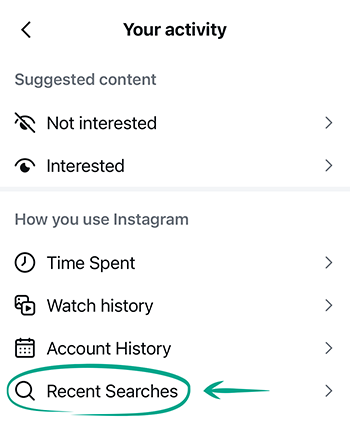
- Tap Clear all or the cross next to the queries you want to delete;
- Tap Clear all again.
What for: To reduce the risk of data leaks.
If you've connected other sites or apps to Instagram — to find followers, count likes, and so on — they may have access to your profile info, your name, your profile picture, the e-mail associated with your profile, images and videos you posted, and your follower and following lists. In some cases they may also be able to like posts and follow or unfollow accounts on your behalf. It's a best practice to periodically clean up your list of third-party apps and services. This helps prevent unauthorized activity in your account and reduces the risk of a data breach.
To revoke the access of apps to your account:
- Go to your profile and tap the three-stripe icon in the upper-right corner of the screen;
- Under Your app and media, tap App website permissions;
- Tap Apps and websites;
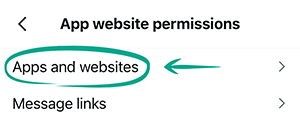
- Remove all apps on the Active tab.
What for: To prevent cybercriminals from getting hold of them.
By default, Instagram stores in the memory of your device the photos and videos you take in the app. If a stranger gets a hold of your device, they might be able to find your Instagram posts, even those you've deleted. Also, the app can automatically archive your posted stories and live streams once they disappear for your followers after 24 hours. That way, anyone who snoops in your account could end up seeing content that was never meant for them. To avoid this:
- Go to your profile and tap the three-stripe icon in the upper-right corner of the screen;
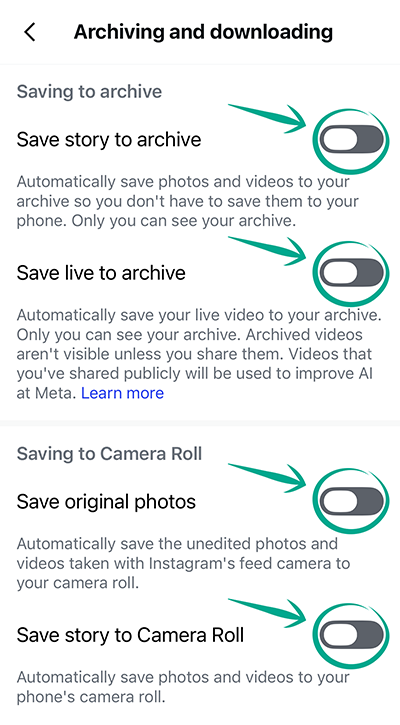
- Under Your app and media, tap Archiving and downloading;
- Disable the options:
- Save story to archive;
- Save live to archive;
- Save original photos;
-
Save story to Camera Roll.
Please note: The app still keeps any recently deleted content archived for 30 days. There's no way to disable this.
What for: To prevent information leaks.
When you follow external links on Instagram, its browser saves that information. If somebody gains access to your device, they can use the information to make inferences about your habits and preferences.
To clear your browsing history in Instagram, along with temporary files:
- Go to your profile and tap the three-stripe icon in the upper-right corner of the screen;
- Under How you use Instagram, tap Your activity;
- Go to Link history;
- Tap Clear all;
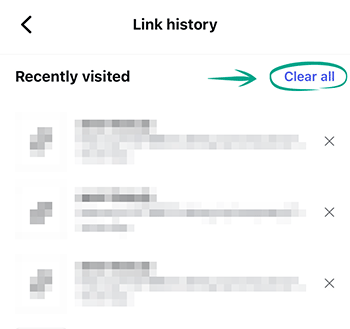
- Tap Clear again to confirm.
What for: To stop showing everybody when you are online.
By default, Instagram shows when you are online or the last time you went online to your followers and users to whom you sent direct messages. When you're online, people who want something from you can track your status and flood you with messages. Some of the followers you've approved without knowing them personally might actually be scammers. By following your status over a period of several days, they'll see when you are likely to be offline and unable to respond promptly to a cyberattack.
To stop showing your activity status:
- Go to your profile and tap the three-stripe icon in the upper-right corner of the screen;
- Under How others can interact with you, tap Messages and story replies;
- Tap Show activity status;
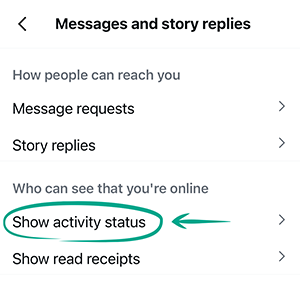
- Toggle off Show activity status.
Downside: By hiding your status you will also be unable to see the activity status of your followers.
What for: Not to appear in ads.
By default, Instagram shows information about your ad-specific activity to your mutual followers. For example, the app alerts others if you like a corporate profile or a specific product. You may not want some people to know what products and services you like.
To hide such information from other users:
- Go to your profile and tap the three-stripe icon in the upper-right corner of the screen;
- Open Accounts Center;
- Tap Ad preferences;
- Go to the Manage info tab;
- Tap Social interactions;
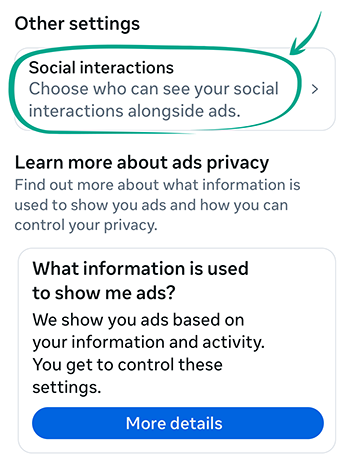
- Tap your account name;
- Under Who can see your social interactions alongside ads for this account? select Only me.
What for: To prevent cybercriminals from getting hold of your personal information.
If your profile is public, all your posts are visible to all Instagram users by default. Search engines can also include your posts in search results. If your profile is public, information in posts can be used against you. For example, information about your personal life can help telephone fraudsters to make up a convincing story in order to steal money from your bank accounts. To make your posts visible only to your followers, switch your account to private:
- Go to your profile and tap the three-stripe icon in the upper-right corner of the screen;
- Under Who can see your content, tap Account privacy;
- Toggle on Private account;
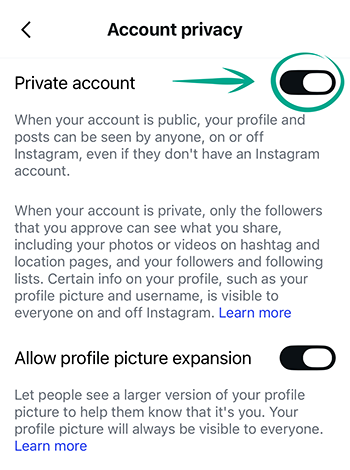
- Tap Switch to private to confirm.
How to improve your Instagram experience
What for: To update your preferences.
If you no longer like or never liked the recommended content in your feed, you can reset the preferences based on your info, activity, and content — or turn off suggested content for 30 days:
- Go to your profile and tap the three-stripe icon in the upper-right corner of the screen;
- Under What you see, tap Content preferences;
- Select the relevant option:
- Tap Reset suggested content and follow the on-screen prompts;
- Toggle on Snooze suggested posts.
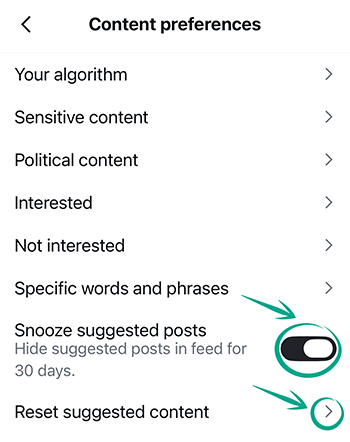
Please note: As soon as you reset these settings, the app will start building new recommendations based on your info, activity, and the content you engage with. Suggested content won't go away, but the topics will likely change.
What for: To avoid distractions.
By default, Instagram sends you notifications for all events and interactions, as well as service messages and ads. If some notifications distract you, disable or mute them.
To temporarily turn off all push notifications at once:
- Go to your profile and tap the three-stripe icon in the upper-right corner of the screen;
- Under How you use Instagram, tap Notifications;
- Toggle on Pause all;
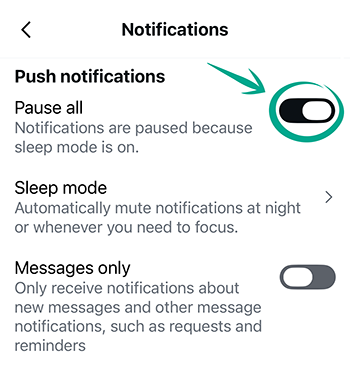
- Choose how long you'd like to pause notifications for.
To get notifications only for your direct messages:
- Go to your profile and tap the three-stripe icon in the upper-right corner of the screen;
- Under How you use Instagram, tap Notifications;
- Toggle on Messages only.
To customize push notifications for each category of events individually:
- Go to your profile and tap the three-stripe icon in the upper-right corner of the screen;
- Under How you use Instagram, tap Notifications;
- Under Push notifications, select the event types you want to enable push notifications for;
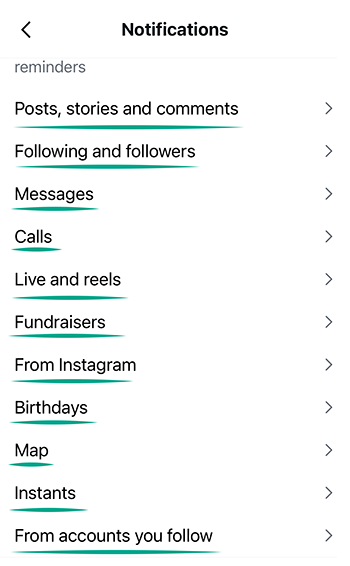
- Select Off for each event type or subtype;
- Go back to Notifications and toggle off the notifications in Shopping under Other notification types;
- While you're at it, toggle off Voting reminders.
To customize e-mail notifications:
- Go to your profile and tap the three-stripe icon in the upper-right corner of the screen;
- Under How you use Instagram, tap Notifications;
- Under Other notification types, tap Email notifications;
- Disable the options:
- Feedback emails;
- Reminder emails;
- Product emails;
- News emails;
- Support emails.
What for: To take control of your screen time on Instagram.
If you're worried you might be spending too much time on Instagram, you can set a daily time limit for using the app. The app will alert you once you reach your limit.
To set a daily limit:
- Go to your profile and tap the three-stripe icon in the upper-right corner of the screen;
- Under How you use Instagram, tap Time management;
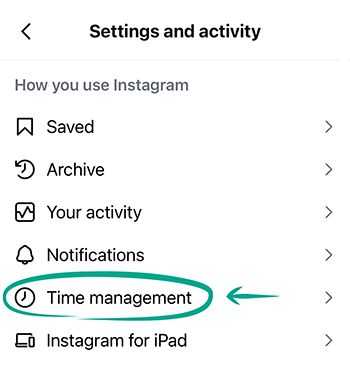
- Tap Daily limit;
- Select a suitable option:
- 15 minutes;
- 30 minutes;
- 45 minutes;
- 1 hour;
- 2 hours.
Please note: The daily limit is only a recommendation and won't actually limit your access to Instagram. You can simply dismiss the notification and go on using the app as before.
What for: To see only what you like.
Instagram offers its users a ton of diverse content, but some posts can still be unpleasant, for example, they may contain scenes of violence or substance use. The platform considers this kind of content inappropriate by default. You can cut down on how much of it appears in your feed, search results, Explore and Reels, and on hashtag pages:
- Go to your profile and tap the three-stripe icon in the upper-right corner of the screen;
- Under What you see, tap Content preferences;
- Tap Sensitive content control;
- Choose Less;
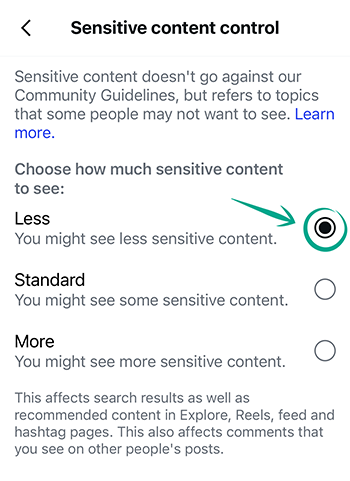
- Tap Confirm;
- Go back to Content preferences;
- Tap Specific words and phrases;
- Enter the words, phrases, and emoji you want to hide from your feed into the text box, separated with commas;
- Tap Add;
- Tap Done.
What for: To go to bed on time.
If you tend to lose track of time while using Instagram, you can set a timer that reminds you when it's time for bed. This helps you step away from Instagram and take a proper break from the screen.
To turn on sleep mode:
- Go to your profile and tap the three-stripe icon in the upper-right corner of the screen;
- Under How you use Instagram, tap Time management;
- Tap Sleep mode;
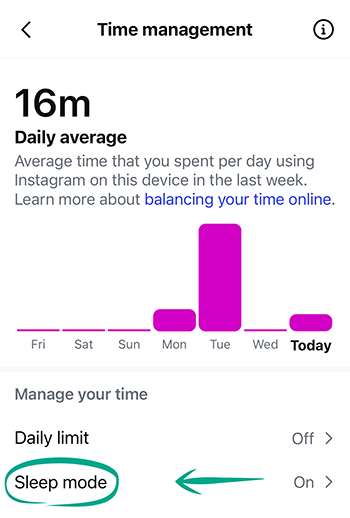
- Turn on Sleep mode;
- Set the Start time and End time;
- Select the days of the week when sleep mode will be active;
- Tap Save.